Sales promotion for FMCG with an impact after purchase
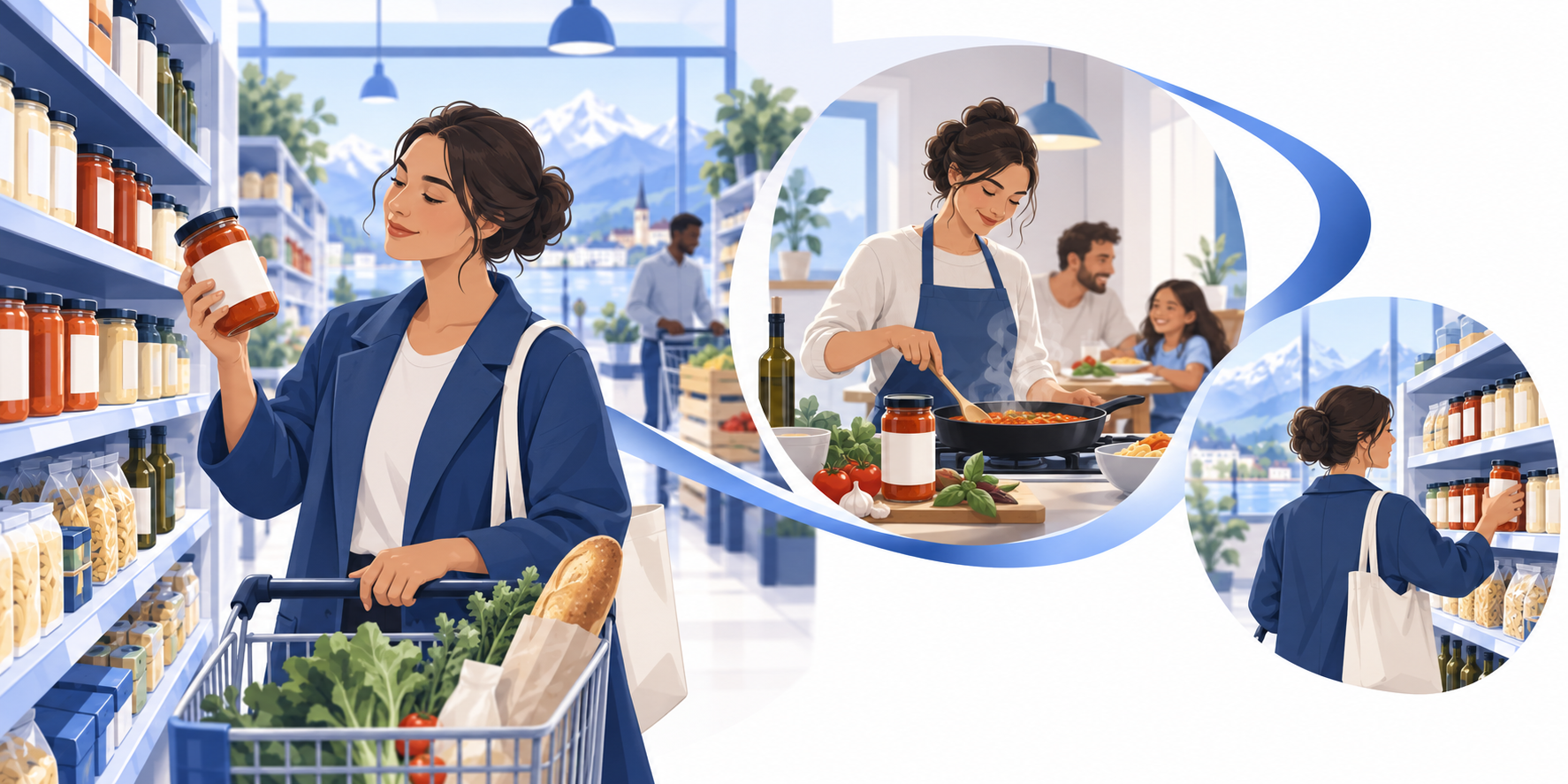
The promotion is running. The display is in place, the purchase incentive is visible and the first entries are coming in. A good start for your trade marketing team. Yet on the next shopping trip, the decision at the shelf starts all over again.
What remains of the campaign when the incentive is gone?
That question belongs in the planning from the outset. Sales promotion can get a product into the shopping basket. A well-planned activation also lays the groundwork for understanding buyers better and following up after purchase with a relevant prompt.
The goal of your sales promotion
Sales promotion covers time-limited measures that create a specific purchase incentive. These include price promotions, product samples, cashback, prize draws and collection promotions. The right mechanic depends on the barrier you want to address.
With a new product, people may lack a first experience. With an established product, the aim may be to open up another consumption occasion. Or you may want to understand why buyers do not return after their first trial.
These are different tasks. Before choosing the mechanic, it is therefore worth defining a clear goal: what should this campaign change, and for whom?
“More entries” is usually not enough. “Encourage people to try the product for the first time and learn which occasion they choose it for” already gives the planning some direction.
The mechanic follows the purchase barrier
A product sample lets people experience the taste or use directly. That makes sense when this is precisely the experience missing from the purchase decision. Distribution alone, however, does not yet show whether the person buys later.
Cashback starts with the purchase. With Instant Cashback, this idea can be implemented as Digital Sampling: consumers buy the participating product and receive a fixed, guaranteed cashback via TWINT when their entry is valid. They experience the product they have bought.
A prize mechanic such as Win Cashback follows a different incentive logic. Here, there is a chance to win back a purchase value or a defined amount. A displayed win remains provisional until it has been checked.
A collection promotion, in turn, can provide a visible reason to participate again or keep collecting. If it is intended to encourage further purchases, the connection between purchase, progress and reward must be easy to understand.
The right mechanic addresses your specific purchase barrier and is simple enough to work in everyday life.
The purchase barrier determines the mechanic
- 01Experience is missing
- Product sample or tasting
- 02Purchase risk holds people back
- Consider guaranteed cashback
- 03A reason to take part is missing
- Consider a suitable prize mechanic
How to compare two possible mechanics
Take a brand with a new cooking sauce as a planning example. The team could distribute product samples or offer a guaranteed cashback after purchase. Both can encourage trial. The central question is which barrier the campaign should address.
If consumers need to experience the taste and texture before they want to buy a pack, a tasting is a natural choice. The evaluation should then show whether relevant people were reached and what feedback is available on the product experience. How many buy later remains unknown without additional tracking.
If the product can be explained and is available, but the first regular purchase feels risky, cashback may be a suitable alternative. The purchase takes place before reimbursement. Redemption can be linked to a verified purchase; a distributed sample portion initially shows only that someone received the product.
So compare the whole journey. What preparation does the campaign need? What costs arise during distribution or redemption? How easily does a person understand the process? What can the team actually assess afterwards? A mechanic with many contacts is not automatically the better answer to your growth question.
A hybrid is also conceivable: an on-site product experience followed by a digital entry point. The transition must offer a recognisable benefit. If the person has to provide similar details twice or complete a lengthy process after the tasting, that is precisely the barrier to include in the practical test.
What the campaign actually shows
- Product sample
- Distribution or observed experience
- Cashback
- Valid redemption according to the verification rule
- Further purchase
- Provide for separate proof of purchase
Use the purchase moment to listen
A promotion brings people into contact with your brand for a specific reason. A short dialogue can use this moment to ask a relevant question: why did you choose this product? When do you want to use it? What alternative did you consider?
At DiALOGiFY, this voluntarily shared information forms part of Buyer Signals. Together with observable events, it provides context for the next meaningful contact. A cashback redemption and an answer about the consumption occasion show different things: participation in the campaign and the product’s intended place in everyday life.
The value comes from the question you can then answer better. If you want to develop an idea for using the product, the usage situation helps more than a long list of demographic details. So only ask questions whose answers you actually intend to use.
Additional information and consent for later marketing communications must be kept clearly separate from participation and the reward.
The next contact belongs in the campaign brief
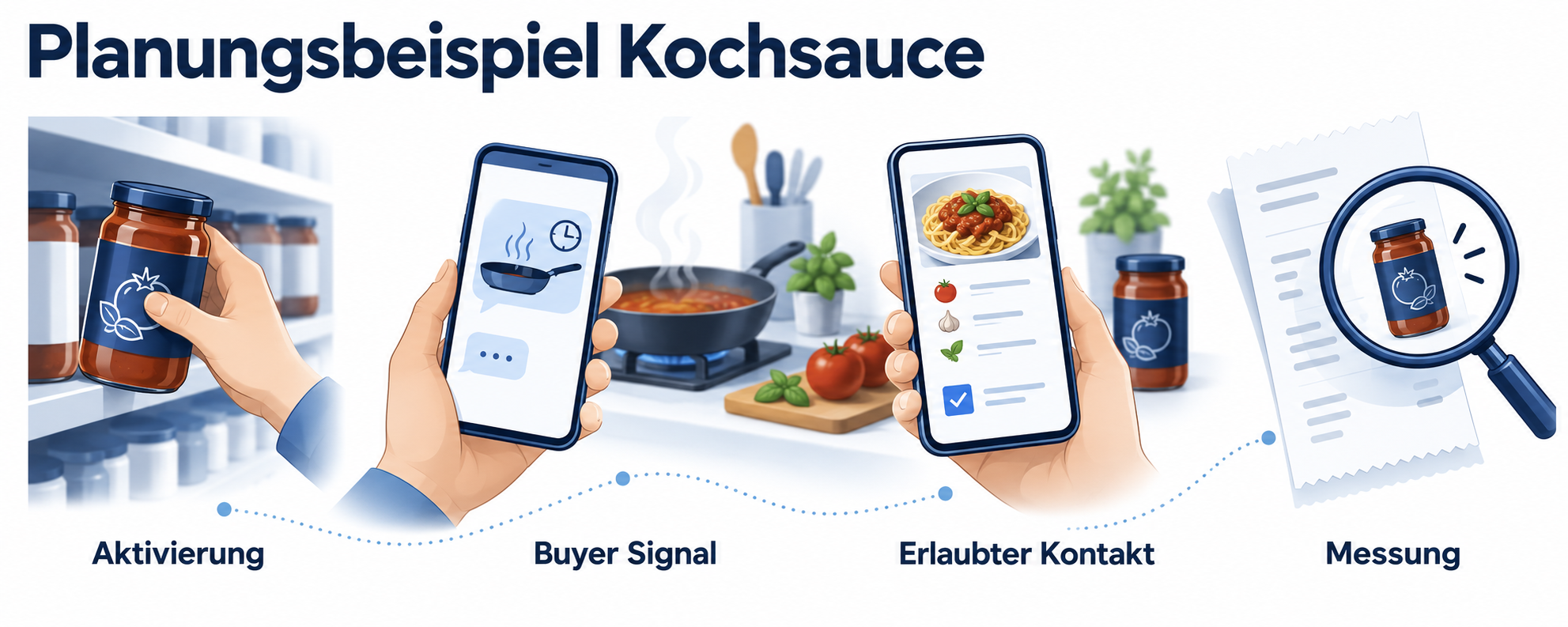
For the cooking sauce, activation creates a reason to try it. In the dialogue, the brand asks about its intended use: a quick evening meal, cooking together or meal prep.
A relevant recipe idea can be derived from this for a permitted follow-up contact. A later repeat-purchase prompt follows the usual consumption and shopping rhythm. Which content and timings work is tested during the campaign.
This gives the promotion a follow-up. DiALOGiFY plans these relevant subsequent contacts within a Touch Journey. This could be help with using the product, a feedback question or a repeat-purchase nudge. The task determines the contact, rather than the desire to send yet another message.
Cooking sauce planning example
Check the entire participation journey before launch
For the cooking sauce example, the team needs a shared understanding of three moments: what does the person see at the shelf, what happens in the dialogue and what help do they receive later? Every transition should deliver on the preceding promise.
Test the process with the intended product, campaign materials and smartphone. Let someone who does not know the concept begin. Do not explain anything beforehand. Observe whether they understand the benefit, recognise the participating product and know what they need to do to complete the process.
Record questions and drop-offs in concrete terms. “Too complicated” is not yet an actionable observation. “After scanning, the person did not know whether they needed a receipt”, on the other hand, shows which content you can change. Also check an invalid entry and an interrupted process: a helpful error message is part of the experience.
The brief also needs responsibilities. Who answers participation questions? Who checks exceptions? Who decides what to do if the product or materials are missing in stores? These points should be settled before launch so that the campaign does not have to develop a process while it is already running.
Four questions for the practical test
- Promise
- Is the benefit immediately clear?
- Participation
- Are the steps understandable?
- Exception
- Does the error message help?
- Responsibility
- Who resolves outstanding cases?
Measurement follows your goal
You need more than a large participation count to evaluate the campaign. Before launch, define which events you can observe and which question they answer.
- Participation shows how many people used the mechanic.
- A confirmed purchase shows a purchase in accordance with the campaign terms.
- Buyer Signals provide information about motivation or usage context.
- A further confirmed purchase can show repeat purchase within the defined period.
These stages are not interchangeable. A click on a reminder is not yet a repeat purchase. Whether the promotion generates additional purchases can only be assessed against a suitable comparison baseline.
Before choosing the mechanic, record the goal, purchase barrier, learning question and follow-up in the brief. For the cooking sauce, this could look as follows:
- Goal: encourage people with little time to try the product for the first time for a quick evening meal.
- Purchase barrier: the new product and how to use it are not yet familiar.
- Learning question: for which cooking occasion is the sauce chosen?
- Follow-up: offer a recipe idea for that occasion with the appropriate consent.
If any of these answers remains open, an important building block is missing from the plan. The prerequisite remains the same: the product is available in the intended stores and the campaign is easy to understand at the point of purchase.
Evaluate events separately
- 01Participation
- Mechanic used
- 02Purchase
- Confirmed according to the verification rule
- 03Buyer Signal
- Context shared voluntarily
- 04Repeat purchase
- Further purchase within the measurement window
Frequently asked questions about sales promotion
Which sales promotion suits a new product launch?
Start with the barrier: lack of product experience, uncertainty about buying or an unclear benefit require different answers. A mechanic only becomes suitable through its target audience, retail setting and planned measurement.
How do I connect a promotion with customer loyalty?
Plan a useful contact after participation and the permission required for it. An idea for using the product or a relevant feedback question can be a sensible starting point. Whether this leads to further purchases must be observed separately.
Which metric belongs in the final report?
The metric that answers your original question. Report participation, confirmed purchases, voluntarily shared information and further purchases separately. Claims about additional impact require a suitable comparison baseline.
A promotion with a follow-up
In the Customer Momentum System, we plan what follows the promotion: what do we learn from the purchase, and which relevant contact prepares the next one? Alongside the purchase incentive, the campaign thus has a task between purchase 1 and purchase 2.
For your next campaign brief, the crucial question is therefore: what should happen after participation?
Review your promotion brief with DiALOGiFY. Together, we clarify the purchase barrier, the mechanic and the planned step after participation.