A cashback system for brands: from purchase incentive to repeat purchase
«You get money back.» A cashback offer is easy to explain. Whether it feels just as simple is decided afterwards: during the scan, participation and payout.
For your brand, there is more to it than a refund. A cashback system can encourage people to try a product, create direct contact with buyers and prompt the next purchase. The key idea: plan cashback as the beginning of the relationship. Alongside participation, your brand then gains insights for the next activation.
What is cashback – and what does it offer your brand?
In a cashback campaign, consumers first buy the product at the current retail price. They then receive an amount back in accordance with the campaign terms. With Win Cashback, they instead enter for a chance to win. A direct discount, by contrast, is deducted at the checkout.
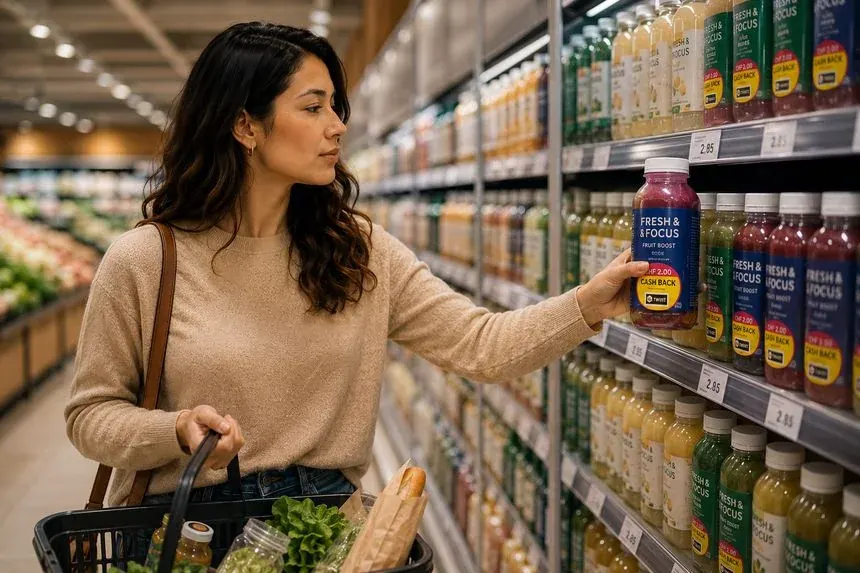
For an unfamiliar product in particular, the refund can provide a good reason to put it in the basket. The benefit is visible on the packaging and tied to the product: buy, try and receive cashback.
Participation also creates an opportunity to talk to buyers. Your brand can learn who is trying the product for the first time, what it was bought for and what prompted the purchase. This can inform more relevant messages and a useful next contact.
Instant Cashback or Win Cashback: which incentive fits?
Both options begin with an attractive offer on the product. But they make different promises to consumers.
Instant Cashback: a guaranteed benefit for trying a product
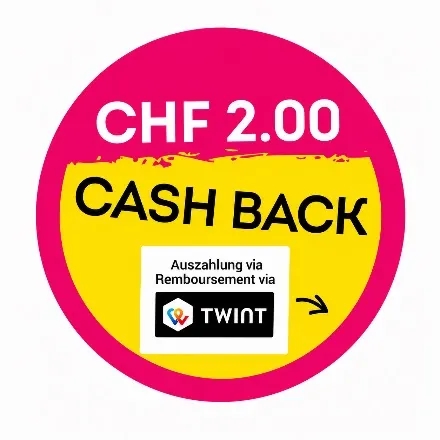
With Instant Cashback, buyers receive a set amount back when their participation is valid. In Switzerland, DiALOGiFY uses TWINT for this: buy the product, scan the individual QR code on the sticker with the TWINT app and redeem the cashback in the dialogue. No additional campaign app is needed.
This makes the mechanic interesting for new launches and product trials. People buy the product in a shop and experience it in their everyday lives. That is why DiALOGiFY also calls it Digital Sampling. The guaranteed benefit supports the decision to try something new.
More about the process: Instant Cashback with TWINT.
Win Cashback: a chance to win as an additional purchase incentive
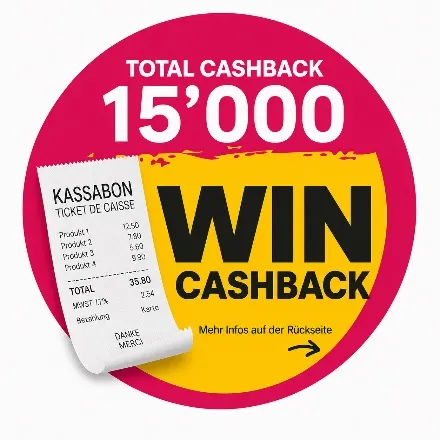
With Win Cashback, participants have a chance to win back the purchase value or a set amount. This suits a promotion intended to draw attention to a product or range and invite people to take part. A displayed win remains provisional until participation has been checked.
Your objective determines the choice: if every valid participation should receive a guaranteed benefit, Instant Cashback fits. If the chance to win should be the campaign’s attraction, Win Cashback is an option. This distinction must be immediately clear on the sticker.
More about the process: Win Cashback.
Instant Cashback
- Benefit
- A set amount when participation is valid.
- Occasion
- A new launch or product trial.
- Communication
- A guaranteed benefit.
Win Cashback
- Benefit
- A chance to win back the purchase value or a set amount.
- Occasion
- Attention for a product or range.
- Communication
- A chance to win back the entire shopping amount.
From the sticker straight into the dialogue
The cashback sticker connects the product on the shelf with digital participation. At DiALOGiFY, every marked product unit carries an individual QR code. Contact therefore begins directly with the purchased product.
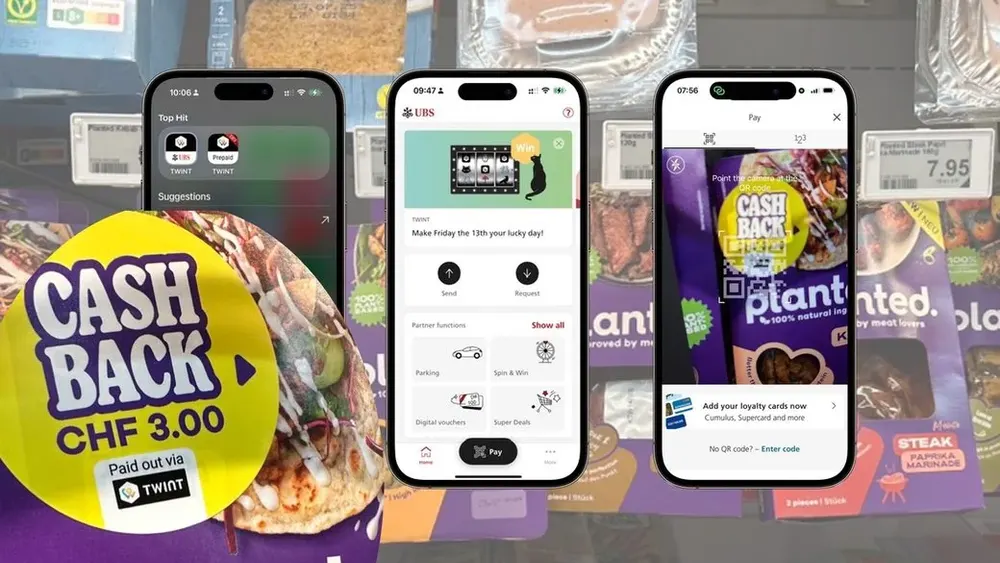
Example of the entry process for Instant Cashback with TWINT
For consumers, the offer needs to remain easy to understand. How much do I get back? Is the amount guaranteed, or is there a chance to win? What happens after the scan? A short, clear dialogue guides participation and delivers on the sticker’s promise.
This turns a packaging promotion into direct contact. This is precisely where your brand can learn more than the number of redemptions alone.
Buyer Signals with a clear purpose
Why did someone choose your product? What occasion is it for? What would otherwise have ended up in the basket? At DiALOGiFY, these voluntarily shared answers are part of Buyer Signals. They add the context of the purchase to participation.
Imagine a drinks brand: it wants to know whether people mainly drink its product on the go, with a meal or during a short break. The answers can show which usage occasions deserve more space in its communication. If the drink is mainly bought for on-the-go consumption, that occasion can be reflected more specifically in images, messages and the next promotion.
Asking about an alternative can also be revealing. Your drink might compete with a coffee during a short break. The communication can then focus on that specific moment and why your product is a good choice for it.
This gives your team concrete starting points: sharpen purchase arguments, highlight relevant consumption occasions and better tailor later contacts to the person. The answers describe participating buyers and provide pointers for decisions; they do not automatically represent all buyers.
This calls for a few well-chosen questions. Additional information remains voluntary. With Instant Cashback, it is not something people must provide in exchange for the refund; consent to later marketing communication is also a separate decision.
How cashback can encourage repeat purchases
After the first trial comes the next question: will the product end up in the basket again? A relevant repeat-purchase prompt brings the brand to mind when the next shopping trip approaches. With Instant Cashback, a delayed repeat-purchase nudge is included as standard. Its content and timing reflect when the product is typically needed again.
Further purchases can also be included directly in the cashback campaign. If the campaign allows multiple participations, cashback can provide another reason to buy again later. Your brand then has the opportunity to attribute confirmed repeat purchases to participants and measure them.
This tells you which buyers return after the first trial. Additional questions can reveal what convinced them and what place the product now has in their everyday lives.
This knowledge becomes useful for your next activation: you can emphasise compelling purchase arguments, time repeat-purchase prompts better and develop successful approaches further. Beyond the first purchase, the cashback campaign therefore provides a basis for helping your brand get chosen again on the next shopping trip.
What you can measure after the cashback campaign
Evaluation starts with three simple figures: how many products with campaign stickers were included in the campaign? How many valid participations were there? How many cashbacks were actually redeemed?
Calculate the redemption rate as follows: cashbacks redeemed divided by the number of products with campaign stickers actually sold, multiplied by 100. If sales figures are unavailable, use the total number of marked campaign products as the reference figure.
With Win Cashback, examine the participation rate and redeemed wins separately. The chance to win is part of the mechanic – so not every valid participation receives cashback.
The voluntary answers also show who bought the product for the first time and which purchase motives occur among participants. If repeat purchases are included, the recorded subsequent purchases are added. The evaluation therefore answers not only «How many took part?» but also «What can we learn from this for the next purchase?».
For planning, cashback amounts, stickers and implementation belong in one shared budget. The crucial point is to align this budget with the campaign objective: enable product trials, understand buyers better or encourage further purchases.
Frequently asked questions about cashback campaigns
Do consumers need an additional app?
Instant Cashback with DiALOGiFY uses the TWINT app. No additional campaign app is needed.
How does cashback become a repeat-purchase incentive?
Through a relevant contact after the product trial or through a campaign that provides an additional incentive for a later purchase. If this repeat purchase is confirmed within the campaign and attributed to the same person, it can be measured.
How does cashback differ from a discount?
A discount reduces the price directly at the checkout. Cashback is redeemed after purchase in accordance with the campaign terms. Participation gives your brand the opportunity for direct dialogue.
What can come after cashback
In the Customer Momentum System, cashback is one possible entry into direct dialogue with the shopper. Voluntary information and observable events provide Buyer Signals for the next relevant contact. Further contacts and, where needed, CRM integrations are planned separately for a longer-term Touch Journey. A single cashback campaign is not yet a loyalty programme.
The campaign works coherently when the benefit on the product is convincing, participation remains simple and the next step fits buyers’ everyday lives.
Plan your cashback campaign with DiALOGiFY.
Together, we will clarify which incentive fits your product, what you want to learn about your buyers and how you can encourage the next purchase.
Further reading
How to choose the right sales promotion