
One purchase becomes the next
From the shelf to the second purchase
By the end of this page you will know the numbers that change your next annual retailer talk. They are in chapter 07.
Briefly honest: where do you stand right now?
Four typical starting points, one of them is probably yours.
Before a launch
You are about to launch. Then this is your most important question: what happens after the first purchase? That is exactly what this page is about.
Launch running, repeat stalling
The first purchase works, but the second does not come. You are in the middle of the most expensive gap, and from chapter 03 on you will see how to close it.
We do not measure repeat
You do not know who repurchases, or why not. Then chapter 07 is built for you: the number that makes it visible.
We hand out samples, impact unclear
Then this page applies to you one step earlier. Your gap is not purchase 1 to purchase 2, it is sample to purchase 1: Sample to Purchase. The sample identifies the interested person before they ever bought, and leads them verifiably to the first purchase. The rest is the same system, chapter by chapter.
Why good products fail anyway
You know it from experience: most launches do not make it. What they really fail at, a simple story shows.
The number behind it
Only 17% of the FMCG launches analysed achieve above-average trial and repeat purchase: trial is only half the job. What matters is whether first-time buyers come back.
Source: NielsenIQ, Launch Fast, Learn Faster, European FMCG Analysis, 2026.
And the success criterion from Nielsen’s breakthrough research is called endurance: holding 85% of year-one sales in year two. Even the industry’s success criterion is a repeat-purchase criterion.
Do you know this story?
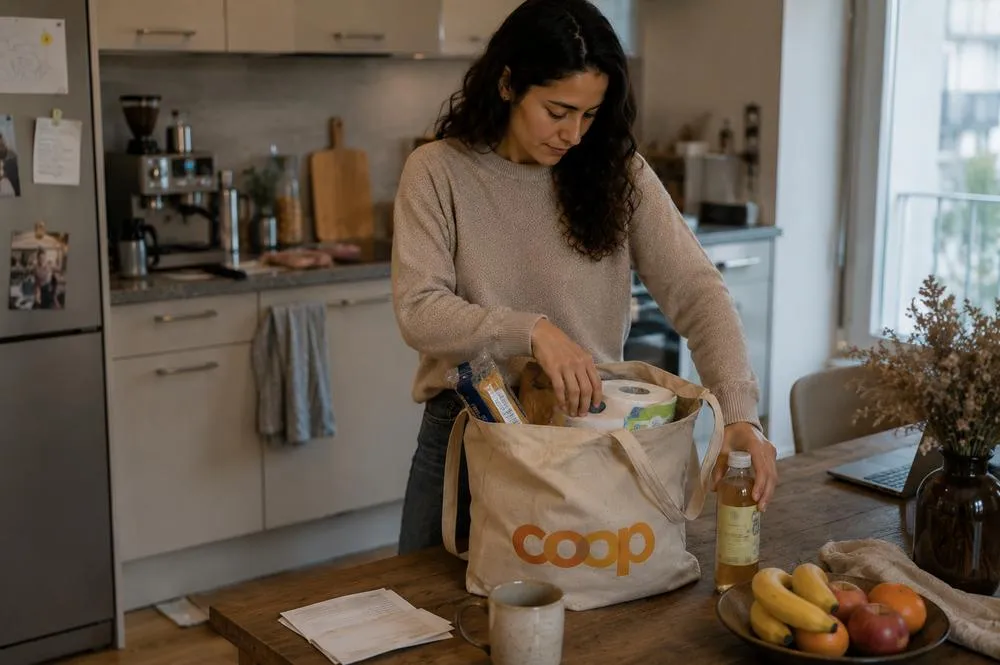
- Monday Purchase 1 Bought, full of expectations.
- Wednesday Tried Tasted, liked, fits the moment.
- Transition The gap The most expensive gap in retail.
- Friday Forgotten The product fades into the background.
- 2 weeks later Another brand Competitor bought. No reason to switch, no reason to stay.
Most products do not fail at being discovered. They fail at staying in everyday life.
Launches do not fail at the first purchase. They fail at the second.

“We used to evaluate campaigns. Today we understand what happens between first purchase and repeat purchase.”
Remember this buyer. She accompanies you through all nine chapters, and at the end she buys again.
Byron Sharp, How Brands Grow (2010): Brands grow because many occasional buyers keep buying, not through a few loyal fans. The second purchase is therefore the lever growth really hangs on.
The next questionSo: why does it break exactly between purchase 1 and purchase 2?
After the purchase, the thread breaks
On the day of the purchase, your contact with the buyer ends. From then on, you only see totals.
What you see today
Reach, open rates, clicks, plus panel sales weeks later
What you do not see
Who bought, why, and whether that person comes back
The buyer who chose you in the store today is anonymous to you. You cannot thank her, ask her anything or remind her. So chance decides the second purchase.
But we do see reach, opens and clicks?
Look at them one by one. Reach counts views, not a counterpart: it tells you how many were reached, never who. The open rate deceives, now that Apple Mail auto-reports opens, read or not. And a click shows a reaction, but no person and no purchase. A real contact needs both: a recognisable person and a recognisable reaction. And even where these numbers are accurate, they all measure before the purchase. The thread this chapter is about breaks after it.
And this disadvantage grows every year
The retailer knows the buyer, you do not. Cumulus and Supercard know who bought your product once and then switched to a competitor. That same knowledge makes retailer private labels stronger, they have been gaining share on the Swiss shelf for years because they draw on real purchase data. Anyone still booking only reach negotiates the annual talk empty-handed, while the other side knows every one of your buyers.
The brands that close this gap first win the data lead in their category. And whoever drives it in their team is no longer the person who books campaigns, but the one who proves what they achieve.
The Monday buyerShe chose you on Monday, and she liked it. But you do not know: to your systems she never existed.
Romaniuk & Sharp, How Brands Grow Part 2 (2021): Repeat buying follows stable, measurable patterns, confirmed with current data across markets and categories (continuing Ehrenberg’s classic repeat-buying research). Whoever knows their buyers can steer repeat purchase instead of hoping for it.
The next questionSo: what would have to happen instead?
Unlock the full content
Enter your work email address to read the full page. It stays unlocked in this browser.
The idea in four steps
Turn every first purchase into the beginning of a relationship instead of the end of a campaign.
Identify
The first-time buyer volunteers to be known, because it pays off immediately.
Understand
A few well-placed questions show why and for which moment the purchase happened.
Prompt
At the right time comes the fitting impulse, without pressure.
Measure
The repeat purchase is proven, not assumed.
Each of these contacts is a Touch: an interaction with an identified person and an observable outcome. Mere reach never has either.
The growth logic behind it
Growth = penetration × purchase frequency
Media and distribution pay into the left side: more buyers. The four steps serve the right side: the same buyers buy more often. Only both together is growth.
The Monday buyerImagine she volunteers to be known on Monday, because it pays off immediately. Everything else in this story becomes possible through that.
The next questionSo: how does that work concretely at the shelf?
How it works, in six steps
Everything starts with the QR code on the pack.
- 1Purchase in the store
- 2Scan the QR code on the pack
- 3Instant cashback via TWINT
- 4One question in the dialogue, skippable
- 5Later: the fitting impulse
- 6A second scan shows the repeat purchase
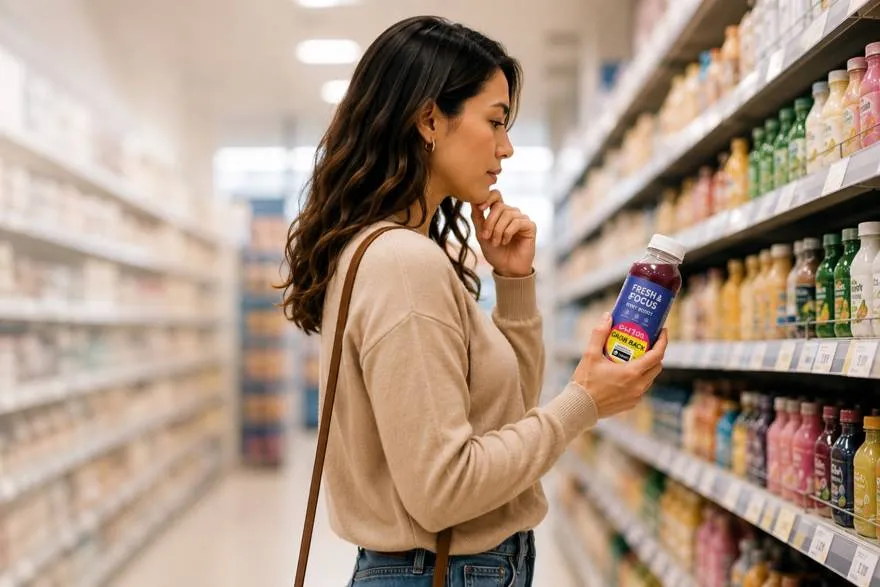
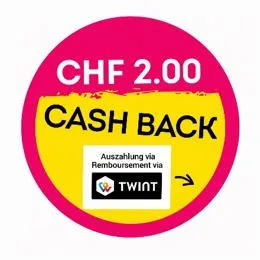
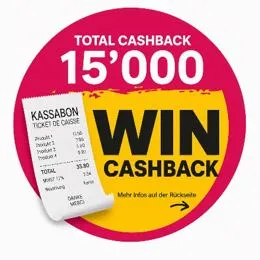
 This is what it looks like physically: stickers on the pack, payout via TWINT. In our projects to date, 10 to 30 percent of buyers of a stickered product redeem the cashback, depending on sticker, category and cashback amount. That is enough: even this share is a large, purchase-verified sample.
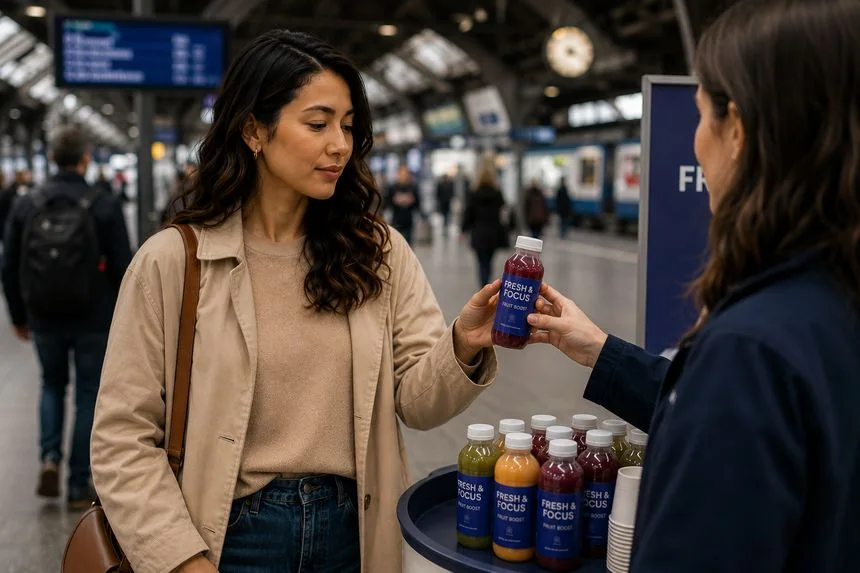
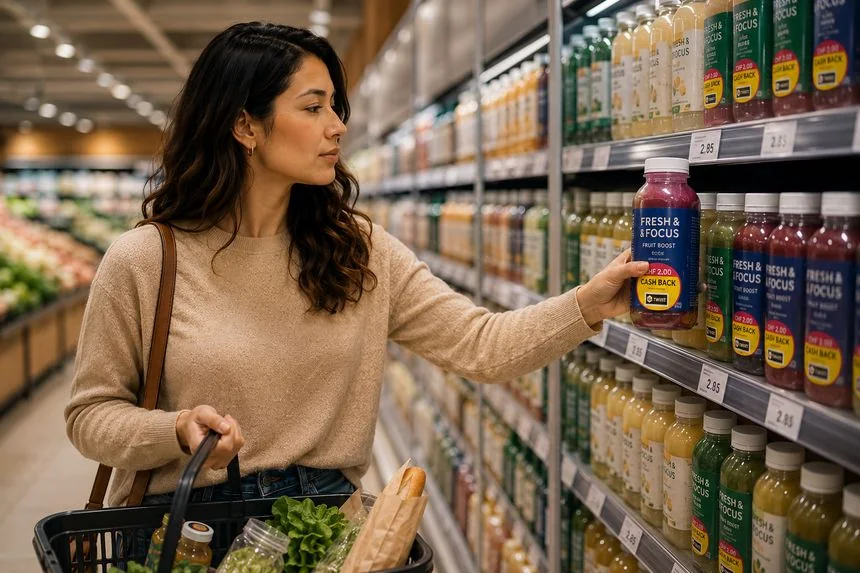
The cashback is more than an incentive: it delivers the purchase proof and voluntarily turns an anonymous buyer into a contact. Data-protection compliant, because built that way.
Why cashback is the strongest entry point
This rate beats classic promotion formats by a multiple, their participation mostly stays single-digit. And the magnitude changes who takes part: at up to a third of your buyers, it is no longer just bargain hunters and contest professionals, it is the cross-section of your buyership. That is exactly what makes the sample so valuable: you see your real buyers, not a fringe group.
But the principle is open. From contests through recipe ideas and sampling to product advice, every creative campaign idea docks onto the same system. Cashback opens the door, what you build behind it is up to you.




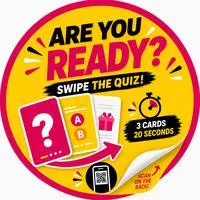

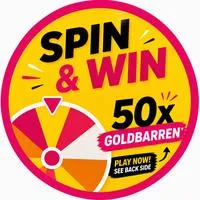
Seven real campaign types, from collecting through quiz and gifting to the prize wheel, all on the same system.
The Monday buyerShe scans the QR code on the pack; the cashback lands on TWINT seconds later. The anonymous buyer has become a contact.
BJ Fogg, Behavior Model (2009): Behaviour happens when prompt, motivation and ease meet in the same moment. The buying moment at the shelf is exactly that point, which is why the entry works there and not days later.
The next questionSo: what do you learn from a single question?
One question, and the map of your category emerges
The question is, for example: which moment is the pack for? From thousands of answers emerges the picture no panel shows. Chips example, illustrative.
The moments at a glance
What the moment demands: Relaxing with a snack that tastes like always
What you lose to there: Chocolate, popcorn, other chips
Typical buyer: The evening relaxer
What the moment demands: Putting out something everyone likes
What you lose to there: Popcorn, sweet pastry
Typical buyer: The host, the evening relaxer
What the moment demands: Satisfying a sudden craving instantly
What you lose to there: Nuts, pretzel sticks, other chips
Typical buyer: The spontaneous one
What the moment demands: A shared moment that connects
What you lose to there: Apéro platters, pizza, sweets
Typical buyer: The host
What the moment demands: A snack that suits every guest
What you lose to there: Apéro pastry, olives, nuts
Typical buyer: The host
What the moment demands: Snacking without interrupting the game
What you lose to there: Energy drinks, pizza
Typical buyer: The spontaneous one
The Monday buyerOne question, one tap: the pack is for the TV evening. Now you know what you are up against with her that evening: chocolate and popcorn more than the next chips shelf.
Clayton Christensen, Competing Against Luck (2016): People buy products for a purpose in a concrete situation. The same milkshake serves a different purpose in the morning commute than in the afternoon with a child: two moments, two completely different competitors.
The next questionSo: how do you remind the consumer that her next moment is missing your product?
The right impulse for the right buyer
The best impulse is not an ad but a reminder at the right time: the moment will come again, and your product should not be missing then. The right time is rarely the consumption moment itself: advertising during dinner disturbs, a reminder at the shopping list helps. Three buyer types, three messages: this is how the reminder adapts.
Three buyer types, three messages
| Buyer type | The message | Call to action | Why it works |
|---|---|---|---|
| The evening relaxer | Same crunch, same quality you know, new in flavour. try it on your next evening at home. | try it later | For the evening relaxer, trust leads: the opening promises that everything stays the same, only then comes the novelty. |
| The host | Your group does not know this one yet. bring it to the next evening and see who declares it the new favourite. same quality you can rely on. | share with the group later | For the host, relatedness leads and trust reassures at the close: the message makes her the discoverer for her group. |
| The spontaneous one | New flavour, in case you feel like a change. no reason needed. and underneath, the same reliable taste. | try it later | For the spontaneous one, autonomy leads and trust reassures at the close: no reason, no deadline, no pressure. |
The structure is always the same: the opening speaks to the leading need, the closing reassures, exactly one action, and later is always included. Later is not a no but a postponement: the reminder may return later. A real no (further down) ends it.
This is where a countdown would normally sit
We are not adding one. Pressure creates clicks, but no routine: research shows that deadline-driven rewards undermine the desire to come back (Kim et al. 2017). Whoever wants a routine drops the deadline.
The Monday buyerEleven days later, before the pack is forgotten, a friendly reminder arrives, fitting her evening. No countdown. She could have said no.
Thaler & Sunstein, Nudge (2008); Ryan & Deci, Self-Determination Theory (2017): Impulses work best when freedom of choice is fully preserved. Hence permission instead of pressure, and hence the friendly reminder beats the countdown.
The next questionSo: how do you know it works?
Measurable down to the single purchase
The repeat purchase is not estimated but proven: via the second scan or the receipt. Four figures show whether an activation becomes growth.
Penetration
How many new buyers does an activation reach?
Repeat rate
How many of them demonstrably come back?
Time to repeat
How fast does interest become a habit?
Customer ROI
What remains at the bottom line: gained contacts, insights and repeat buyers, economically valued, minus project cost.
Results from pilot projects
Aggregated figures from projects to date in Swiss retail. Repeat rate and revenue lift are averages, share of first-time buyers and redemption rate are ranges, because they vary most by starting point, sticker and category. Internal figures, not guaranteed results.
And from this follows our claim: if even the industry’s success criterion is a repeat-purchase criterion, the proven repeat rate belongs on every launch dashboard from day one. The way NPS became the standard measure of satisfaction.
And this is not theory
Three numbers from real programmes in Swiss retail, anonymised.
From completed DiALOGiFY programmes. Internal, anonymised figures, not guaranteed results.
The Monday buyerHer second scan is not a gut feeling but a receipt: purchase 1 became purchase 2, eleven days time to repeat.
The Monday buyerAnd had she declined? Then you would know that too. Honestly counted is worth more than dressed up.
Reichheld, Darnell & Burns, Winning on Purpose (2021): NPS became the standard because it is simple and comparable. Notably, its creator himself now complements it with the Earned Growth Rate, the growth from returning buyers and their referrals. The industry’s yardstick is moving exactly to where the proven repeat rate stands.
The next questionThat leaves your objections. Rightly so.
Four objections you are right to have
A system that talks your objections away deserves your distrust. So we take them seriously.
What about data protection?
Justified. Therefore: identification only with explicit consent, no message without prior permission, revocation visible at any time. Compliant because built that way from the start, not retrofitted.
Consumers do not want brand dialogue.
True, most do not. The system is built on exactly that: everything is voluntary, every question skippable, declining explicitly allowed. It does not need everyone: even a share of buyers delivers the picture that is completely missing today.
Our CRM can do that too.
Your CRM knows the contacts you already have. This is where the contacts you are missing come from: the anonymous buyers at the shelf. DiALOGiFY does not replace your CRM, it fills it: existing CRM, loyalty and retail systems stay.
Does this need IT resources and a big project?
No. Most pilots are started by marketing itself; setup, tracking and reporting are part of the pilot. A pilot typically takes three months: start small, learn fast, scale only what demonstrably works.
The next questionAnd how does it all connect?
This is exactly the Customer Momentum System
You have just walked through it. The four steps of the idea are the four building blocks of DiALOGiFY’s system. And you do not start from zero: your next campaign is the entry point. It turns from the end into the start of the relationship.
Activate
Business initiatives
Sampling, cashback, launch campaigns: your use case, winning and identifying first-time buyers (chapters 03 and 04).
Understand
Buyer signals
Every answer and every scan shows motive, moment and alternative (chapter 05).
Trigger repeat
Customer momentum
The fitting impulse at the right time, without pressure (chapter 06).
Improve every cycle
Growth cockpit
Repeat rate, time to repeat and the next best action (chapter 07).
Four typical entry points: Instant Cashback via TWINT right at the shelf for new launches, Win Cashback for the existing range, Sample to Purchase for the verified path from sample to first purchase, Win-Back to reactivate buyers who did not repurchase. All dock onto the same system: launches, promotions, sampling and the existing range.
The logic in three sentences: A use case starts the relationship. A touch journey develops it. Buyer signals make it smarter.
The maths behind it: relevant contacts + engagement + buyer knowledge + repeat purchases + loyalty = a higher repeat rate and more revenue per buyer.
What you know after six months
- Which moment carries the highest repeat rate, and what do you really lose to there?
- Which message works for which buyer type?
- How fast does a first-time buyer become a repeat buyer, and what speeds it up?
The Monday buyerThe Monday buyer has become a repeat buyer. Not by chance, by a system.
And if a launch is coming up for you
A launch is decided in its first twelve weeks: listing, media and POS are paid before anyone knows whether the repeat purchase will come. Exactly for this, the system has a ready-made launch programme: six months, from the shelf check through first-purchase activation to the repeat proof. It ends in a launch report with rotation, penetration and time to second purchase: the document for your annual talk with the retailer.
The most honest calculation: what does a delisting after six months cost you, including the listing fees and media already spent by then?
And you? You walk into your next annual talk not with a gut feeling but with a verified repeat rate. That is the difference between a brand manager who ran a campaign and one who proves it worked.
You built the brand. The system only counts what it achieves.
A two-hour workshop is enough to sketch the moments of your category and the first pilot.
We turn first-time buyers into repeat buyers. And we can prove it.
The sources at a glance
- NielsenIQ, Launch Fast, Learn Faster (2026)
Only 17% of the FMCG launches analysed achieve above-average trial and repeat purchase. - Nielsen Breakthrough Innovation Report Europe (2014)
The success criterion endurance from the analysis of 12,000 launches: holding 85% of year-one sales in year two, a repeat-purchase criterion. - Byron Sharp, How Brands Grow (2010)
Brands grow through many buyers who come back: the empirical basis of the growth formula. - Romaniuk & Sharp, How Brands Grow Part 2 (2021)
Repeat buying follows stable patterns, confirmed with current data: measurable and steerable, in Ehrenberg’s tradition. - Clayton Christensen et al., Competing Against Luck (2016)
Products are bought for a purpose in a situation: the foundation of the moments. - BJ Fogg, Behavior Model (2009)
Behaviour happens when prompt, motivation and ease meet: why the buying moment is the entry point. - Ryan & Deci, Self-Determination Theory (2017)
Voluntariness and self-determination carry lasting motivation: the basis of pressure-free impulses. - Thaler & Sunstein, Nudge (2008)
Impulses work best with full freedom of choice: declining stays first-class. - Kim et al. (2017), Psychology & Marketing
Deadline-driven rewards undermine the motivation to return: the evidence against the countdown. - Reichheld, Darnell & Burns, Winning on Purpose (2021)
The NPS creator complements his measure with the Earned Growth Rate: growth from repeat buyers and referrals.