
WhatsApp marketing for FMCG brands
From first contact to the next consumption moment
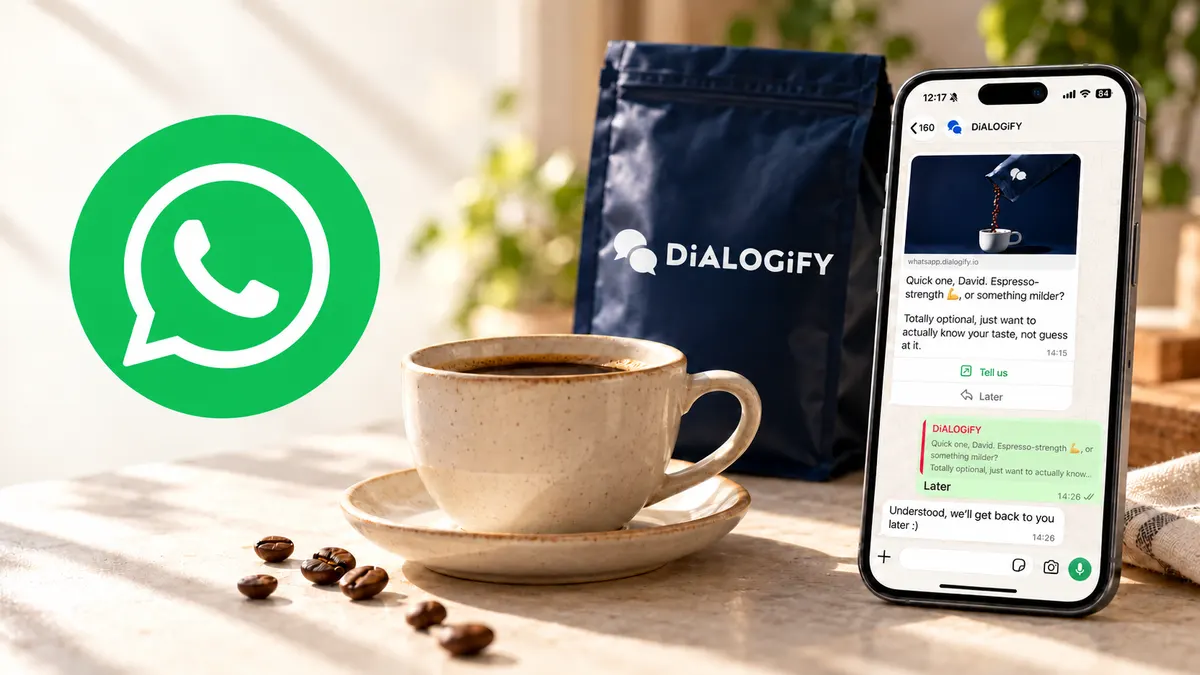
A new coffee lands in the shopping trolley. The next morning, the first cup is on the table. Maybe it tastes right straight away. Maybe the dose still needs adjusting. Maybe the coffee would be worth trying cold, too.
This is where the product experience starts for shoppers. For the brand, this part of everyday life often remains invisible. Yet this is precisely when questions, preferences and reasons to buy the product again emerge.
WhatsApp can create a direct connection between the two sides through a short guide, a relevant question or a requested reminder. What matters is the role those messages play in people’s everyday lives.
What makes WhatsApp useful for brand communication
Reading a message, sending a quick reply, looking at an image, asking a follow-up question: WhatsApp makes it possible to communicate in small conversational steps. For a brand, that means it can respond to an answer and use it to shape what happens next.
With our coffee, it could start with a simple question: “How do you usually make your coffee?” Someone who uses a bean-to-cup machine needs different tips from someone who uses a French press. A short set of options can already make the next message more relevant.
The WhatsApp Business Platform supports media, interactive elements and automated conversations, among other features. A short video can show how to make the coffee; a set of options makes it easier to reply. The platform provides the technical foundation for integrated and automated journeys. Source: WhatsApp Business Platform
Being close to people’s everyday lives brings a clear expectation: a message should have an obvious reason for arriving. People who sign up for brewing tips expect brewing tips. Every further message has to earn its place.
How WhatsApp compares with SMS and email
The choice of channel starts with the content and the response you want. Email, SMS and WhatsApp can complement one another.
Scroll sideways to read the full table.
| Task | SMS | ||
|---|---|---|---|
| Share detailed content | Plenty of room for newsletters, background and multiple topics | Short text, usually with a link for details | Content can be broken into conversational steps or linked |
| Send a short notice | Possible within the inbox | Designed for short text messages | Can be sent as a message within the conversation |
| Show how to use the product | Images and links to videos or guides | Visual content usually reached via a link | Images and videos can be part of the conversation |
| Collect replies | Replies and linked forms | Text replies, depending on the setup | Text replies and interactive options, depending on the setup |
Email can work very well for a monthly overview. SMS is an option for a brief notice. When a brand wants to connect several short steps and respond to people’s answers, WhatsApp is worth considering.
How a WhatsApp conversation starts after purchase
The invitation to a WhatsApp conversation can come during a cashback conversation, as part of a promotion or through a QR code directly on the product. A coffee brand could offer brewing tips and invite interested shoppers to sign up for them on WhatsApp.
The DiALOGiFY coffee test series illustrates what this can look like. The phone views shown here were prepared from test messages and designed for this article.
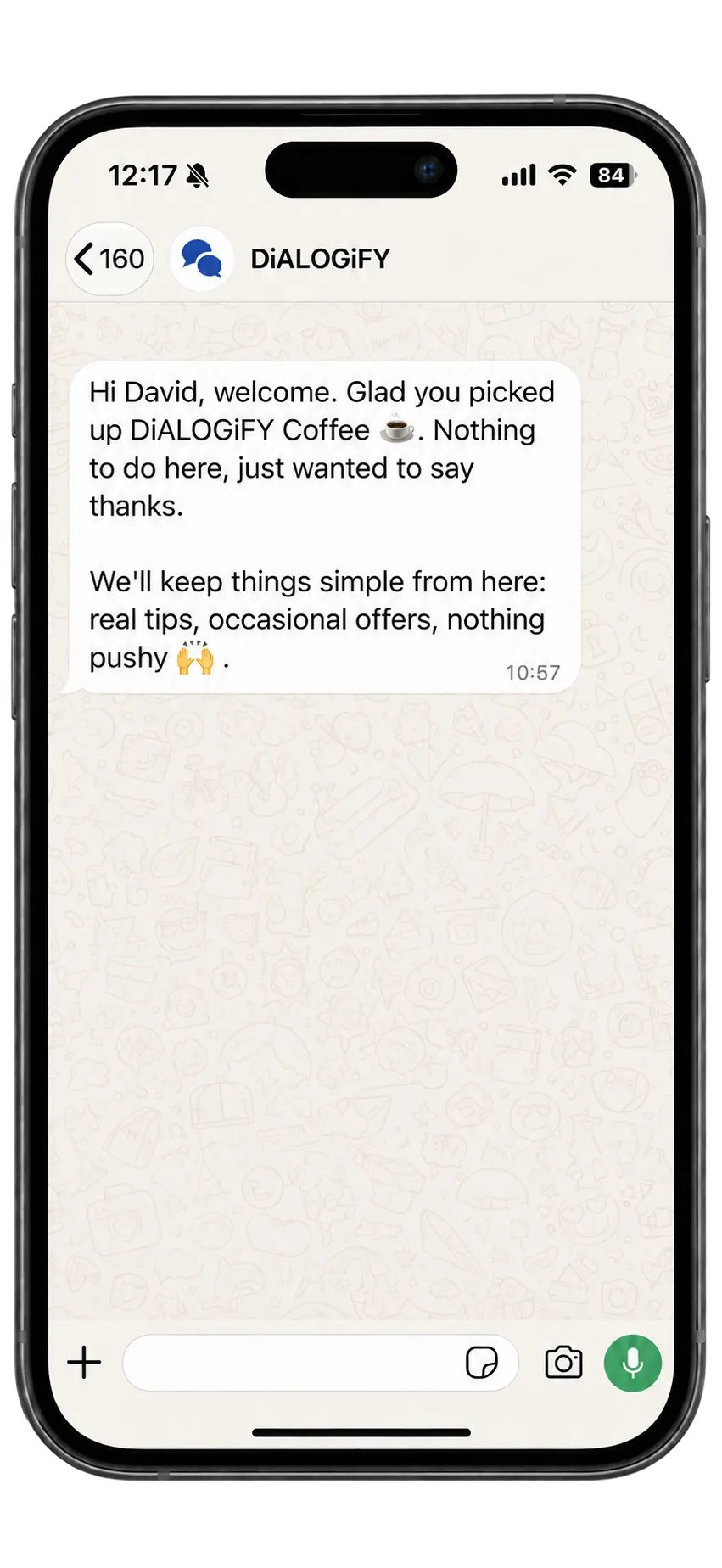
The welcome sets expectations.
“Hi David, welcome. Glad you picked up DiALOGiFY Coffee,” begins the first message. It thanks the recipient for getting in touch and explains what to expect: practical tips and occasional offers.
The DiALOGiFY name and logo are visible in the chat header, making the sender easy to identify. For a brand, recognition and clear expectations go together: who is messaging me, and why should I read on?
A short question invites a reply.
“Quick one, David. Espresso-strength, or something milder?” The message pairs a coffee image with a specific question about taste. David can choose “Tell us” to answer or “Later” to put the conversation on hold.
This is an important difference from a one-way message: it gives the person a choice. In this example, David replies with “Later”. The system then confirms: “Understood, we'll get back to you later :)”.
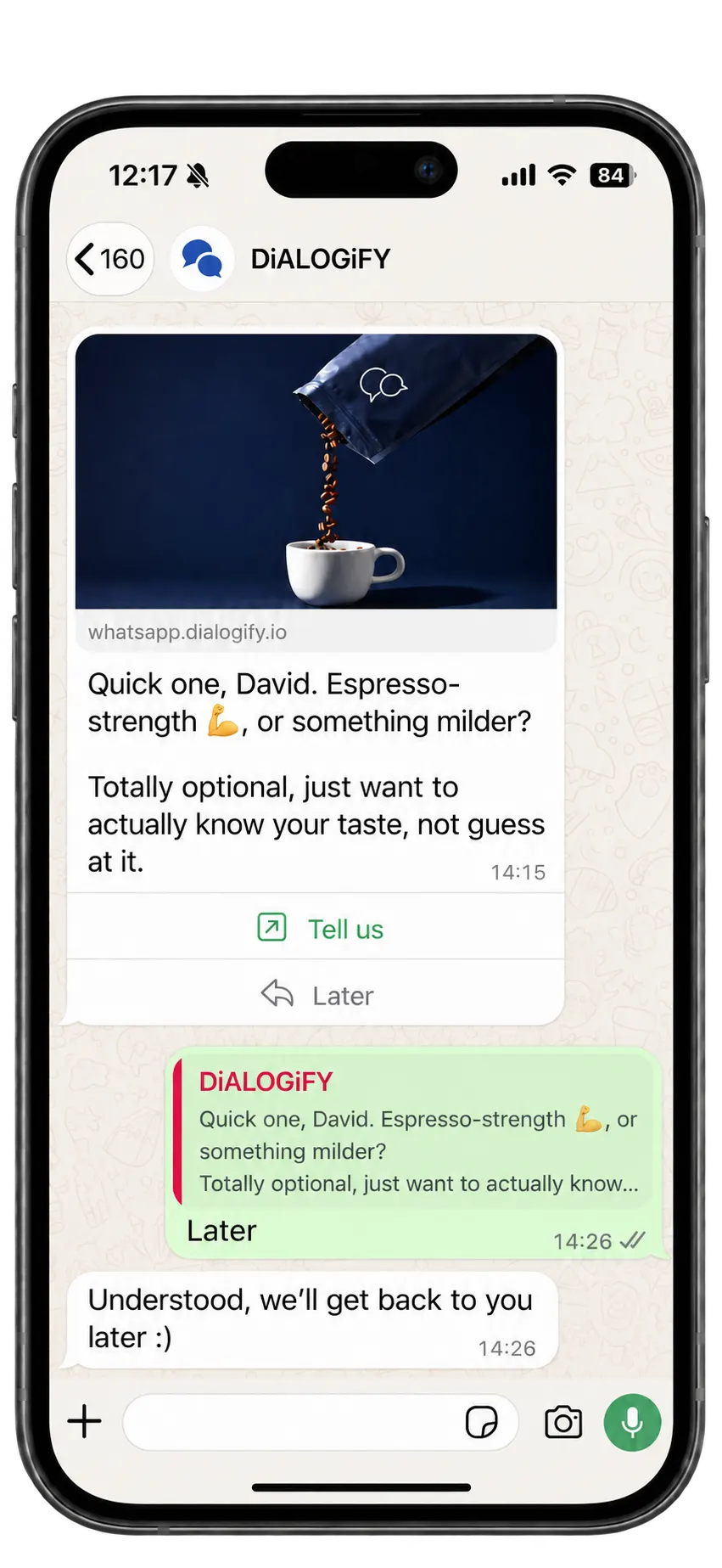
This reaction shows how an automated conversation can take a reply into account. “Later” signals that the person wants to continue another time. It says nothing yet about their coffee preference. Further messages require freely given consent that matches the purpose and the channel.
A follow-up series could build on this with more questions or tips about brewing, flavour or a new recipe idea. The answers and the agreed scope of communication determine how best to continue.
More examples of WhatsApp journeys for FMCG brands.
How consumption moments shape communication
Coffee can be part of a quiet start to the day, a break at work or a weekend with guests around the table. Each of these consumption moments lends itself to different content.
For a quick breakfast, a simple brewing idea could help. Someone who likes experimenting might be interested in a recipe. Someone who mainly serves coffee to guests may need to restock at a different time from someone who makes several cups a day.
A brand can ask about those differences in the conversation. “When do you most enjoy your coffee?” is a small question that can lead to a relevant follow-up. It also shows why product communication can go beyond features and offers: the product has a specific place in everyday life.
What Buyer Signals reveal about preferences
At DiALOGiFY, Buyer Signals are the signals that help brands learn about purchase motivations, usage situations, preferences and reactions. In the coffee example, they arise from voluntary replies and interactions.
| Signal in the conversation | Possible next step |
|---|---|
| “I use a French press.” | Offer a relevant brewing tip |
| “I haven’t tried it yet.” | Ask for feedback later |
| “I’m looking for cold coffee ideas.” | Offer a relevant recipe idea |
| “Remind me next week.” | Take the requested timing into account |
What matters is the precise meaning of the signal. Choosing a recipe idea shows interest. Feedback describes an experience. A click on “Where to buy?” can suggest purchase interest. An actual repeat purchase has yet to be verified.
This distinction helps with both communication and evaluation: the brand knows what the next step is based on and which piece of information is still missing.
How automation turns this into a helpful series
An automated journey connects content with conditions and timing. At the start, each contact is assigned a purpose. As the journey progresses, answers and agreed rules determine what happens next.
NudgeFlow helps plan these follow-up contacts as a series, with relevant content, intervals and rules for continuing.
The coffee series could begin with a welcome, ask how the person makes their coffee and then send the relevant tip. A later question can ask about the product experience. Anyone who wants a reminder can choose a suitable time.
This calls for clear limits: how many messages are in the series? When does it pause? What happens if there is no reply? And where can someone turn with a question the automated flow does not answer?
The WhatsApp Business Platform also has rules on sending messages. Outside the 24-hour service window after the last user message, businesses may only use approved message templates. Consent and opt-outs must be taken into account. These rules should be considered when planning the series. Source: WhatsApp Business Messaging Policy
How Botanify supports product use with a series
Botanify shows how a series of contacts can offer people helpful content over time. In the DiALOGiFY showcase, the series runs via email and web chat. It combines an easy introduction to gardening with ideas for the windowsill and guidance on caring for plants.
It starts with an everyday question: which plant will suit my home if I have little experience? The next piece encourages people to start their own herb garden. The series then covers how to water plants appropriately. Each message focuses on one manageable topic and offers a button to learn more.
Scroll sideways to read all three phone views.
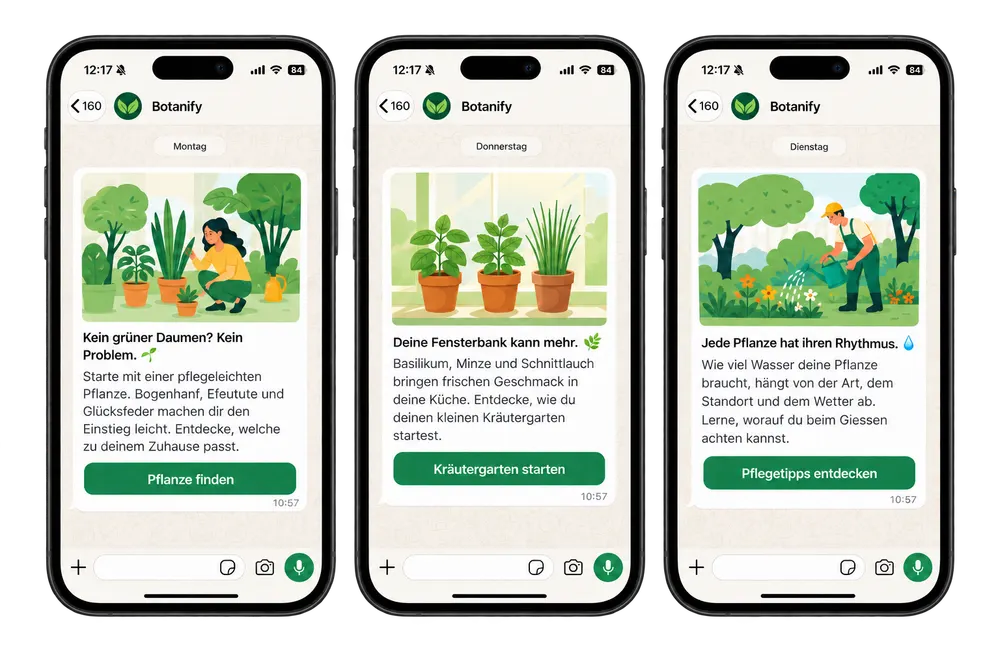
For a brand, this gives the editorial work a clear purpose: build a sequence of content that helps people use the product. A tip makes it easier to get started, the next idea shows another possibility and a care guide answers a question that arises later.
The same principle applies to FMCG. A coffee brand can start with brewing and offer a new way to enjoy the product later. For food brands, recipes, storage or different occasions for use can form the basis of the series. This gives people a clear reason to welcome further contact.
A reminder about the next shop needs a plausible reason
When a bag of coffee runs out depends on factors such as pack size, household and usage. A single sending date can only partly reflect each person’s situation.
One possible question is: “Would you like a reminder to restock your coffee next week?” Anyone who says yes gives the later message a clear reason. A repeat purchase prompt can then follow at a time the person chose.
How DiALOGiFY brings these contacts together
DiALOGiFY’s Customer Momentum System connects activation on the product or at the point of sale with Buyer Signals and relevant follow-up contacts. WhatsApp can serve as a communication channel.
For a coffee brand, planning starts with a specific question: what should happen after the first contact? The answer determines the invitation, the helpful content and the signals needed for the rest of the journey. The implementation is agreed based on the channel, consent and project scope.
Each contact then has a purpose: making it easier to get started, supporting product use, understanding an experience or reminding someone about a next step they have asked for.
Frequently asked questions about WhatsApp marketing for FMCG
How does a WhatsApp journey start after purchase?
The invitation can come during a cashback conversation, as part of a promotion or through a QR code on the product. At the start, shoppers find out what messages they can receive and how to sign up for them.
What happens when someone taps “Later”?
In the coffee test, the chat confirms the pause. The person can answer the preference question later.
Start with a good reason to talk
A manageable journey with a clear benefit is enough to get started. For coffee, that could mean a good first cup, a new brewing idea and a requested reminder.
The questions that matter are: when can we be helpful? What do we need to know to do that? And what next contact follows from the answer?
Want to see what a WhatsApp journey could look like for your brand? Together with DiALOGiFY, you can map the entry point, consumption moments and relevant follow-up contacts.