
The 3 moments that decide growth in FMCG
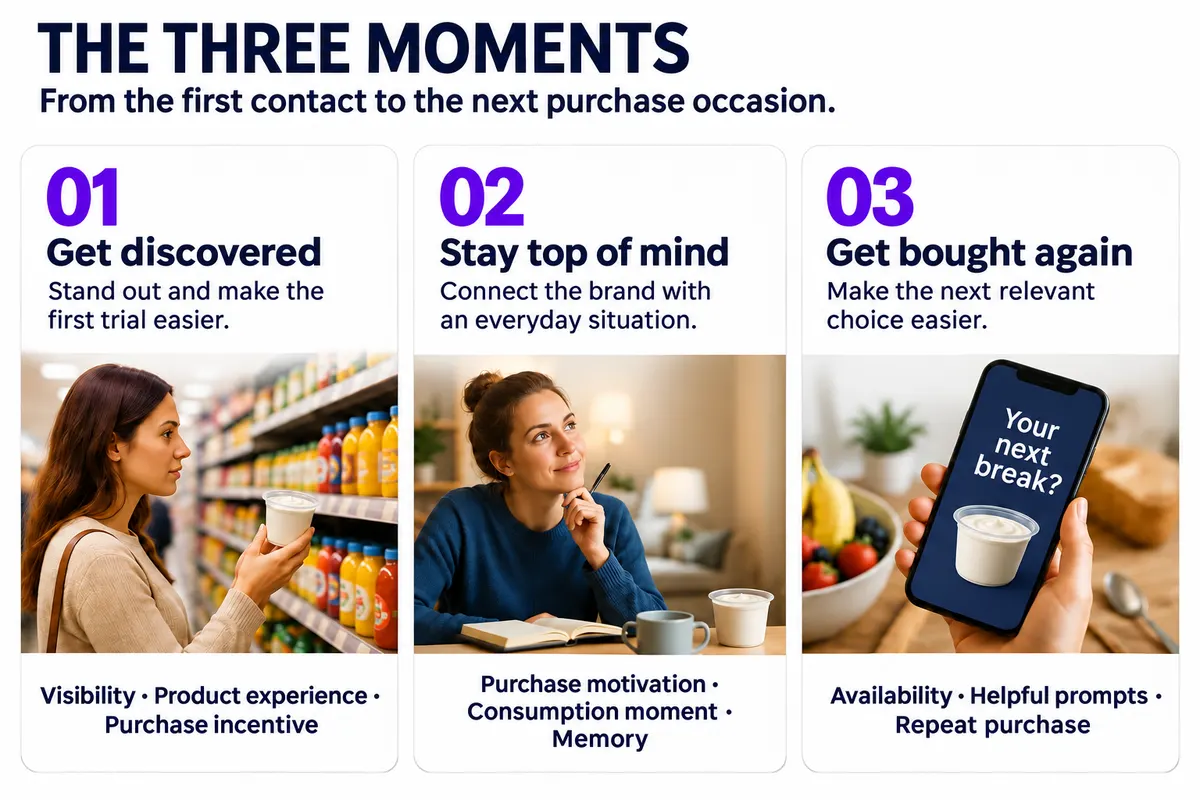
Get discovered. Stay top of mind. Get bought again.
How does attention turn into a first purchase – and a good product experience into another purchase decision? The 3 moments connect activation, buyer understanding and repeat purchase. They help FMCG brands address growth opportunities along these purchase decisions in a focused way.
The tasting is over and the feedback is positive. At the next marketing meeting, the budget for the next activation is up for discussion. What does the team continue, what does it change – and why?
The three moments give this decision a structure. They are planning tasks; in everyday life, consumers move between many contacts, products and purchase occasions.
The benefit extends beyond a single activation: insights from a direct contact can improve the next packaging design, POS message or campaign – including for people who do not take part in any dialogue.
Winning new buyers remains central. Research on brand growth shows the importance of a broader buyer base, including occasional buyers. Repeat purchase complements this task. It shows whether people choose the product on further occasions. Sharp and Allsopp: Where does sales revenue growth come from?
1. Get discovered: understand the barrier to the first trial
A product needs to stand out, be available and offer a clear reason to try it. Which sales promotion helps depends on the specific purchase barrier.
Take a fictional brand launching a new yoghurt as an on-the-go snack. The team is planning an in-store tasting.
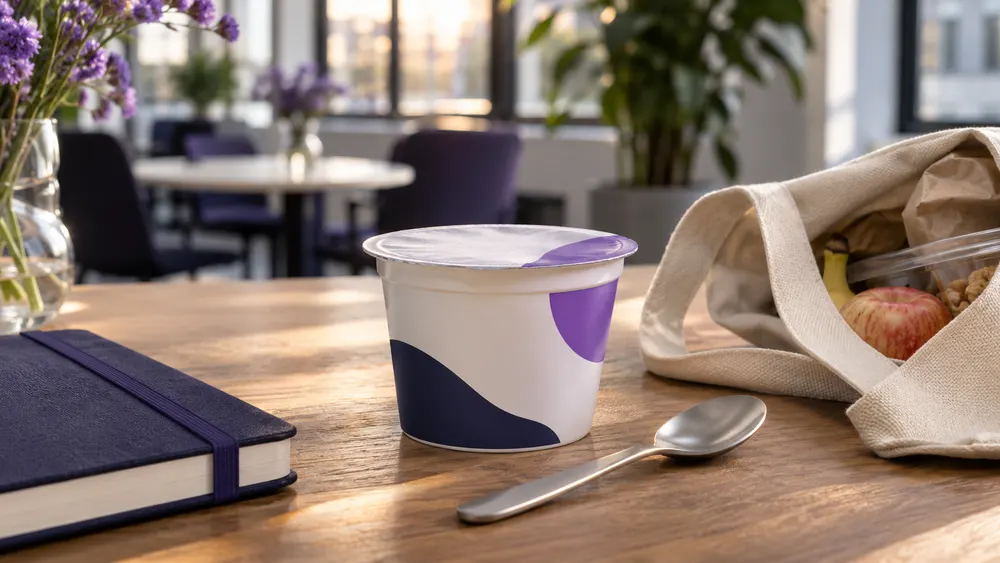
If people are unsure about the taste, the tasting can reduce precisely this uncertainty. If they can barely find the pack in the refrigerated aisle, the team instead needs to work on visibility and placement. If price holds back trial, a purchase incentive is an option. And if the benefit remains unclear, the message needs to be easier to understand.
This leads to an important decision before choosing the mechanic: Which barrier should our activation address, and for which potential buyers?
For the yoghurt brand, the brief could read: we want to reach people looking for a simple snack on the go who do not yet know our product. The tasting lets them experience the flavour. Packaging and the POS presence show the occasion it is intended for and where it can be bought.
For potential new buyers, a free sample is initially a product trial. If they then buy a pack for the first time, that is a first purchase; a further purchase is a repeat purchase. The number of samples distributed does not yet demonstrate these steps. Define in advance which purchases you can capture and how you can distinguish existing buyers from first-time buyers.
2. Stay top of mind: connect the product with a specific situation
After the first experience, another question becomes important: when should someone think of this product again?
For the yoghurt, this could be in the afternoon at the office, on the way home or as a small snack before exercise. These situations offer different starting points for communication and activation.
The Ehrenberg-Bass Institute describes these triggers of buying situations as “Category Entry Points”. They help explain the occasions on which a brand should come to mind. For marketing, this makes the connection to build between the brand and everyday life more specific. Ehrenberg-Bass Institute: Category Entry Points
This is the connection between customer behaviour and memory: the brand learns in which situation its product may be relevant and makes that situation recognisable in its communication.
After the tasting, a short, voluntary dialogue could clarify the first experience and possible everyday moments:
- On which occasion would you eat the yoghurt?
- What did you like or find missing when you tried it?
- What else do you eat or drink on that occasion?
The last question broadens the view of possible alternatives: another yoghurt, a chocolate bar or a coffee. Which choice will actually be made later remains open.
Suppose many participants mention an office break as a possible use. The brand then has a hypothesis for its communication. It still needs to find out whether the person later uses the product in that situation. Promotion participants also do not automatically represent the whole market.
The team therefore includes the office break as a test hypothesis in the next campaign brief. It compares a general product visual with a version for the afternoon break; the pack and brand assets remain the same.
To get started, a clear hypothesis and a limited test within the existing campaign plan are enough. Anyone later wanting to demonstrate that the brand is recalled more often on a particular occasion must investigate that recall separately. A click on the ad is not sufficient evidence.
3. Get bought again: make the next choice easier
A good first experience gives the team a starting point. For a further purchase, however, several things need to come together again: a relevant occasion, memory of the product, an acceptable price and availability.
For our yoghurt brand, this means clarifying the barrier before taking the next action. Someone reporting impractical packaging initially provides an insight for the product team. If the product is missing from the usual shopping location, the next task lies with distribution and retail.
A direct follow-up contact is an option where the person has permitted it and the content and timing make sense. It should build on the previous experience and fulfil a clear task.
Before each planned contact, it is therefore worth asking: what does this make easier for the person when using the product or making the next purchase?
For the yoghurt brand, a prompt for the next office break could make sense after a confirmed first purchase and with appropriate consent. The team needs to check when it fits against the actual purchase and consumption rhythm.
Measuring success requires the same clarity. A click shows a response to content. Purchase intention describes a stated intention. A confirmed further purchase shows repeat purchase within the chosen measurement scope.
To assess the additional effect of a follow-up contact beyond that, a suitable basis for comparison is needed, such as a randomly assigned control group. Purchases outside the measurement scope remain unknown. These limitations belong in the evaluation.
What this changes in the campaign brief
The three moments become useful when they lead to specific decisions before the start. For the next activation, three questions can be added to the brief:
- Get discovered: which purchase barrier are we addressing, and how do we recognise whether we are winning new buyers?
- Stay top of mind: which everyday situation should the brand be associated with, and how do we check whether this connection is growing stronger?
- Get bought again: what makes the next choice easier, and how do we capture further purchases and additional impact?
This also requires responsibility for what follows: who evaluates the insights? Who decides on the next action? And what resources have been budgeted for it?
In the fictional yoghurt example, the test of the office-break visual receives budget first. The observation from the dialogue is enough for this limited test. Before a broader rollout, the team defines the brand and occasion recall it wants to achieve and how to check it. An availability check runs in parallel. If it reveals gaps in the relevant retail outlets, closing them takes priority over additional advertising pressure.
From a single contact to connected planning
Through the Customer Momentum System, DiALOGiFY connects POS activation with buyer understanding and relevant follow-up contacts. The signals gained can help plan next actions and evaluate observed repeat purchases. How DiALOGiFY works
To get started, all you need is a selected product, a clearly identified purchase barrier and a learning question whose answer changes your next decision.
Where is the next useful starting point for your brand? Start with the DiALOGiFY Repeat Purchase Check and assess your starting position based on the information you provide.