Marketing automation for FMCG after purchase
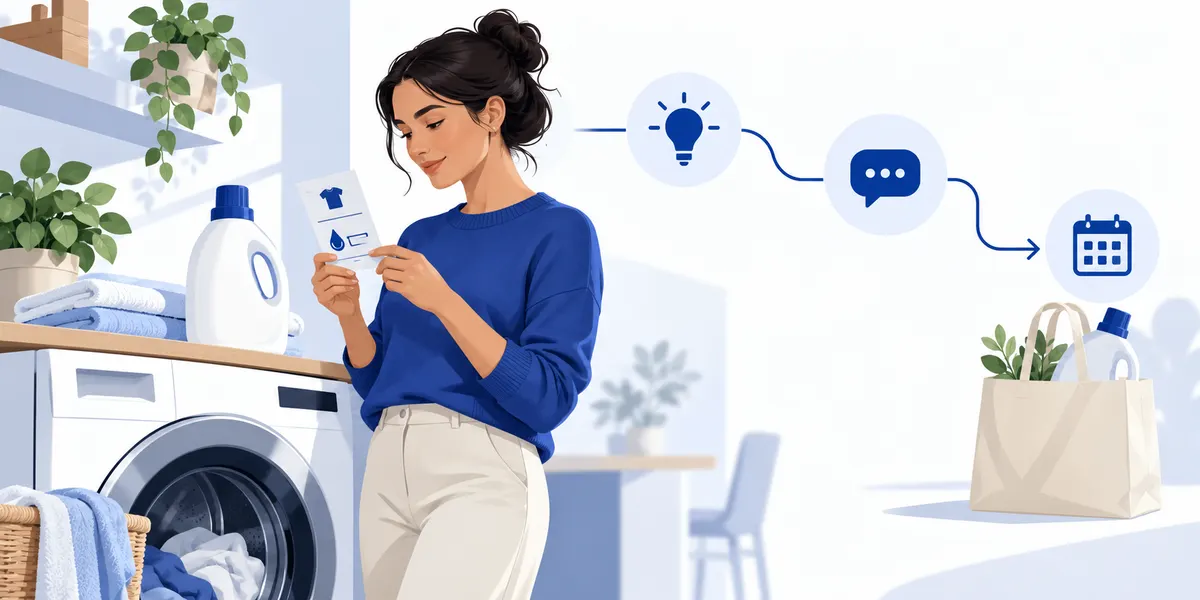
Imagine someone buys your laundry detergent for the first time. The next message promotes another purchase. But the person is still wondering how to dose it correctly.
This is where marketing automation proves its value: first, the right usage advice helps. Later, a feedback question and a repeat purchase prompt can follow. The next contact is guided by usage and the signals available.
For FMCG brands, good automation therefore begins with a specific question: which contact would be helpful right now after the purchase?
What marketing automation means in FMCG
Marketing automation controls recurring communication processes based on defined events, times and conditions. A completed dialogue can start a process. An answer can influence the choice of content. A defined time window can trigger a later prompt.
In FMCG, the appropriate starting point is often the product, the POS or a promotion. Activation creates the direct contact that is otherwise missing in sales purely through retailers.
With Nudge Flows, DiALOGiFY designs personalised follow-up contacts that build on one another. Each contact draws on Buyer Signals and offers a suitable next step. The Touch Journey connects these contacts into a relationship; the Customer Momentum System connects them with retail activation and repeat purchase measurement.
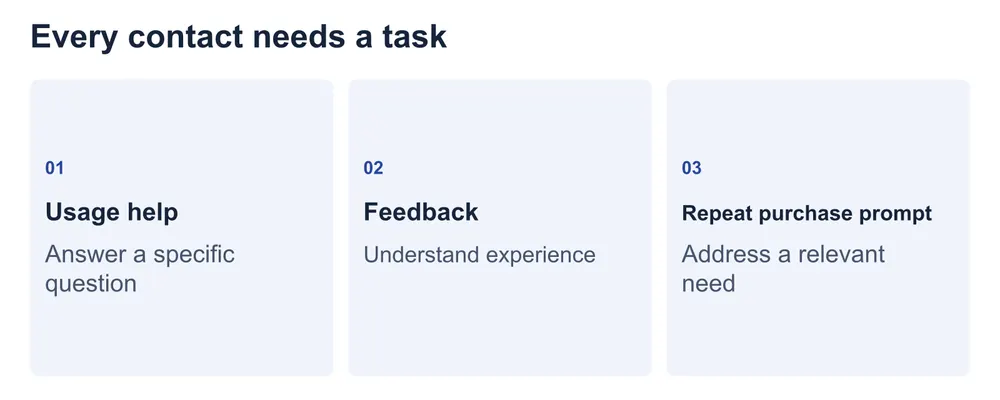
Start with a task for the contact
“We need an email series” already specifies a channel and format before the problem is clear.
It is better to start with usage: what might be missing after the purchase? An idea for using the product? An answer to a common question? A reason to choose the product again on the next shopping trip?
Only then do you decide on content, timing and channel. A recipe must be accessible when someone is cooking. A feedback question needs enough time for actual product experience. A repeat purchase nudge follows the usual consumption and shopping rhythm.
Planning becomes stronger when each contact has a clear task. This makes it possible to check later whether it has fulfilled that task.
Buyer Signals give the process context
A name alone does not explain why a message should be relevant. Purchase motivation and the intended consumption moment often provide a better starting point.
A short question during activation can show, for example, whether a product is intended for use on the move or at home. A later feedback response adds information about the actual experience of using it. At DiALOGiFY, such information and observable journey events are part of the Buyer Signals.
They help align the Touch Journey with the situation. Relevant follow-up contacts can offer usage help, inspiration, feedback or a repeat purchase prompt. The signals used must fit the agreed purpose and planned implementation.
A well-chosen question can already show which next contact would make sense.
From a signal to a testable rule
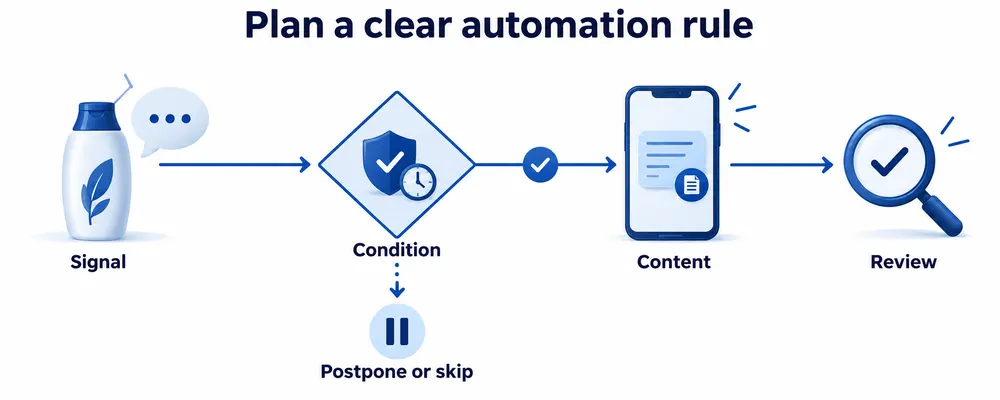
A process only becomes concrete when the team can describe what starts it, what information is available and what should happen next. “Personalise after purchase” is not enough. A usable brief names a defined starting signal and a limited decision.
For the detergent example, the plan could be: following a valid activation, the person is voluntarily asked about their usual laundry situation. For someone with the appropriate communication permission, existing usage guidance is selected on this basis. If the information is missing, the plan provides either general helpful content or no message.
The answer must lead to a selection that can be explained. It must not claim more about the person than was actually stated. Voluntary information about laundry, for example, is no proof of household size, consumption or the timing of the next shopping trip.
For each rule, document the source of the signal, the intended content and who is responsible for changes. Also record which assumption the test is intended to examine. This allows the team to explain later why a contact was planned and when an adjustment would make sense.
A journey for a laundry detergent
As a planning example, let us take a brand that sells detergent through retailers. After the purchase, it wants to help people use the product in a way that suits their laundry routine. The following examples show one possible plan. The rules, channels and connections to be implemented are determined for the specific campaign.
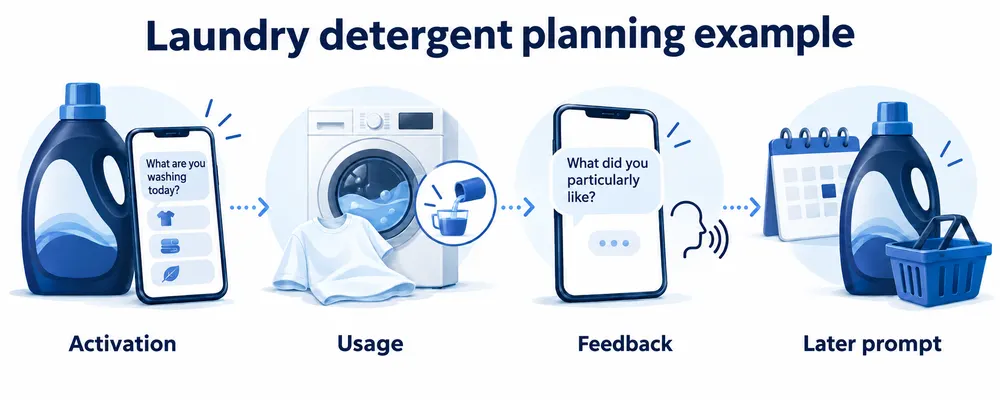
The starting point: a purchase-linked activation leads into a short dialogue. The person can voluntarily indicate the laundry they typically do. Consent for marketing follow-up contacts is recorded separately.
Usage help: for a suitable segment, existing usage advice on correct dosing could follow. It helps people use the product in their own laundry routine.
Feedback: after a planned period of use, the brand asks whether the advice was helpful. The answer can show which information about usage is still missing.
The repeat purchase prompt: a later contact draws on the normal shopping rhythm. Content and timing are initially planned as a hypothesis and tested in the pilot.
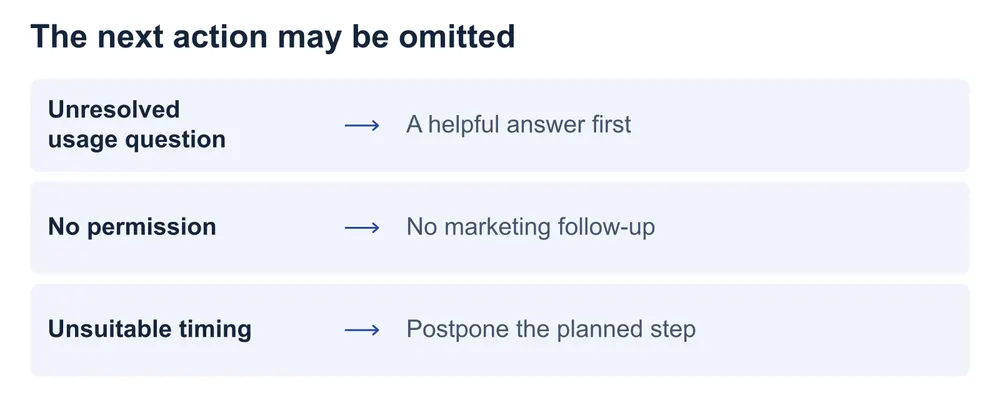
Include the branch in the brief from the outset: if the person reports an unresolved dosing question, a suitable answer is the next step. A repeat purchase prompt is appropriate only once usage has been clarified. If there is no permitted marketing contact, this step is not delivered. The plan thus also describes when a message is postponed or omitted.
For the pilot, one such sequence for a clearly defined user group is enough to begin with.
Omitting a contact is also part of automation
A message may seem useful when it is planned and be inappropriate when it is sent. That is why consent, exclusions, contact frequency and stop conditions belong in the concept from the start.
Someone who does not want further marketing communication must not simply remain in the series. Someone who has already responded may need a different next step. Someone who reports a problem needs a helpful answer.
Test a new process with the intended data and conditions before using it more widely.
Test the journey with real exceptions
Testing involves more than one successful run. Also work through the process with a missing answer, contradictory information, withdrawn consent and a reported usage question. These cases show whether the plan remains understandable outside the ideal case.
For example, check whether someone who gives negative feedback accidentally receives the same purchase prompt as a satisfied person. Or whether an event triggered again would create duplicate messages.
Decide in advance who approves content and who can pause an active process. If a product is unavailable, guidance changes or participants repeatedly ask the same question, the team needs a clear way to make corrections.
Start with a sequence that can be fully explained and controlled. Add segments, channels or branches when the first test reveals a specific need.
Measure the action behind the message
Sends, opens and clicks help you understand the process. The actual assessment, however, follows the task of the contact.
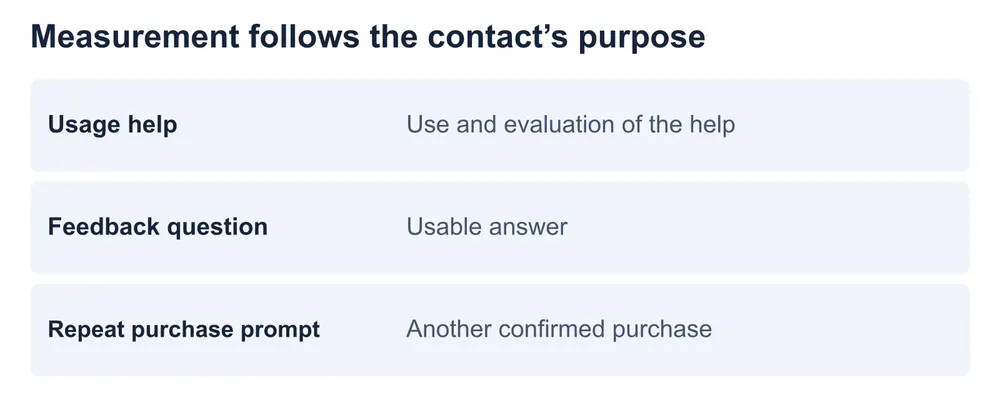
For usage help, it is useful to know whether the content is used and rated as helpful. For a feedback question, a usable answer matters. For a repeat purchase prompt, you need another confirmed purchase if you want to measure repeat purchase.
A lack of response does not prove that the person did not buy. And an observed purchase does not automatically show that the message caused it. Define the observation period and comparison before the test so that the analysis supports a useful decision.
Frequently asked questions about marketing automation
What distinguishes automation from a message series?
A series initially describes a sequence of content. Automation also defines which events, times and conditions control the process. Both need a meaningful task for each contact.
How many contacts should the journey contain?
Start with one helpful step. Add further contacts when they fulfil a specific task: answering an unresolved question, collecting feedback or reminding someone of a suitable shopping occasion, for example.
What role does the existing CRM play?
Clarify which data and permissions are already available and which system controls the planned contacts. An additional activation can complement the CRM. A specific connection is planned and confirmed separately.
What is a meaningful first success?
For usage help, helpful feedback can be a suitable learning signal. If repeat purchase is to be assessed, another confirmed purchase within the planned period is needed. Measurement follows the task of the test.
Start with a clear use case
You do not need to rebuild all customer communication. One product, a relevant consumption moment and a meaningful follow-up contact give you a manageable start.
DiALOGiFY complements existing CRM, loyalty and retail systems. Together with your team, it connects the entry into activation with Buyer Signals and suitable Touch Journeys.
Further reading
- How follow-up contacts remain useful in everyday life
- How activation creates the starting point
- How the product and POS open up digital access